Italian residential buildings completed before 2010 almost universally contain analogue intercom infrastructure: 4-wire or 5-wire runs connecting outdoor bell panels to indoor handsets, with a relay-controlled door strike triggered by a dedicated button. That infrastructure is now being replaced — or supplemented — by IP-based entry systems operating over standard Ethernet networks or existing structured cabling. The transition involves three distinct scenarios: full replacement with native IP hardware, partial replacement using gateway adapters, and cloud-managed SIP systems that treat the door station as just another SIP endpoint.
Why IP Systems Are Entering the Market
The primary driver is remote access: residents and building administrators increasingly expect to answer a door call and release the latch from a smartphone regardless of their physical location. Analogue BUS systems are limited to the distance of copper wiring; an IP system forwards SIP calls to any registered device on any network. A second driver is credential management — IP systems support time-limited access codes, QR tokens, and revokable RFID cards manageable from a browser dashboard, rather than requiring a physical key change or locksmith visit.
A third factor is the cost trajectory of IP hardware. Door stations with 2-megapixel cameras, PoE input, and SIP registration now sell at similar price points to mid-range analogue 2-wire BUS panels, eliminating the historical cost premium that reserved IP systems for high-end new developments.
SIP Architecture: How IP Door Stations Work
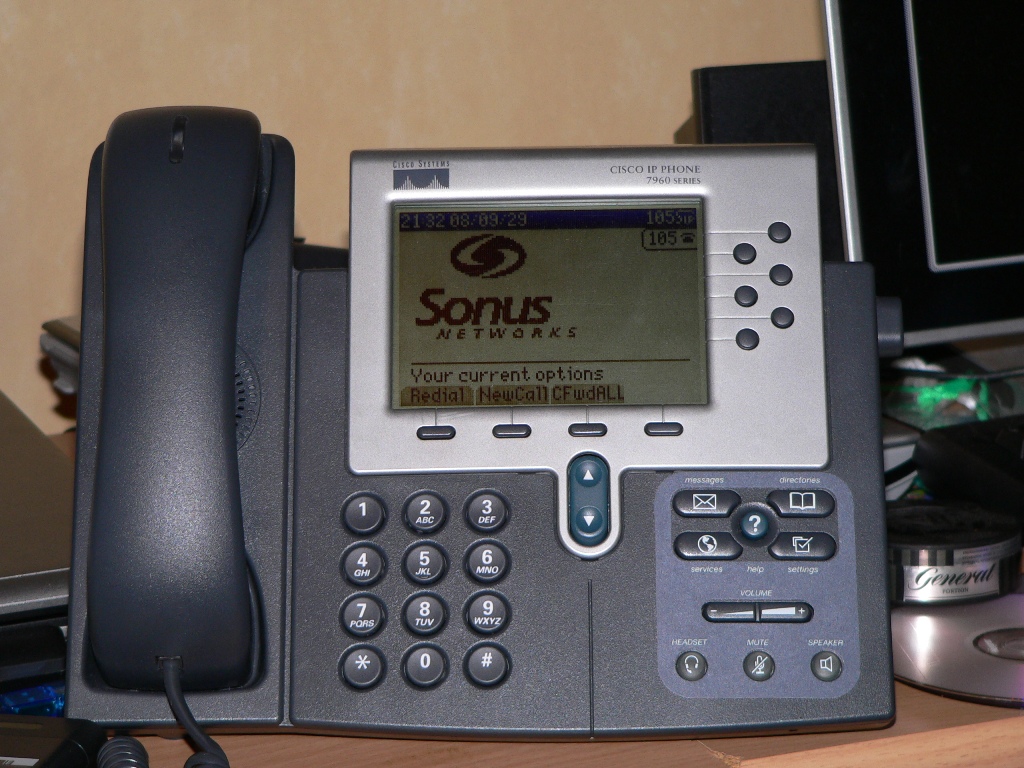
An IP door station is fundamentally a SIP endpoint with a camera, microphone, speaker, and relay output. When a visitor presses the call button for apartment 7, the door station sends a SIP INVITE to the address registered for that apartment. The registered device — an indoor SIP touchscreen, a softphone on a laptop, or a smartphone with a SIP app — rings and presents the video stream. The resident accepts the call, converses with the visitor, and triggers the relay output by pressing a key sequence or in-app button, which energises the door strike and releases the latch.
The SIP server managing registrations can be an on-premises PBX (Asterisk, FreePBX, or a dedicated intercom server), a VoIP-hosted PBX, or a manufacturer cloud server. On-premises installations give the building administrator full control over the dial plan and avoid recurring subscription fees; cloud-hosted configurations simplify initial setup and allow remote administration but introduce a dependency on external network connectivity.
Native IP Hardware: BAS-IP and DO.Comm Configurations
BAS-IP's SP-03F represents one class of IP-native door station deployed in Italian residential buildings. It registers up to five SIP accounts simultaneously — useful where a shared entrance serves apartments that have residents calling on different SIP servers — and accepts power via PoE (IEEE 802.3af) or 12V DC for installations where structured cabling has not yet been installed. Authentication options include MIFARE 13.56 MHz RFID cards and PIN codes. The unit supports BAS-IP's proprietary video intercom app protocol in parallel with standard SIP, which means residents using the BAS-IP app receive richer presence and call features while those using generic SIP clients receive a standard audio/video call.
DO.Comm by Dovit takes a modular approach: an outdoor station called Verso accepts an RFID reader module, a Bluetooth reader module, or a biometric fingerprint reader module in the same chassis. The base unit handles SIP audio and video; modules add credentials. The system allows call forwarding to multiple simultaneous devices — building concierge, resident smartphone, and indoor touchscreen — in priority order, with configurable timeout and fallback logic.
Gateway Adapters: Converting Existing 4-Wire Intercoms
Full replacement of analogue wiring requires conduit access and approval from the condominium assembly, which in Italian law requires a majority of the millesimal property shares represented at a properly convened meeting. In practice, gaining that approval for optional infrastructure work can take 12 to 24 months. Gateway adapters allow IP features to be added without touching the existing analogue wiring.
The AA-15SIP from TEMA IP Audio is one widely used adapter in Italy. It connects to the analogue intercom wiring on one side (4-wire or 5-wire, polarity-sensitive) and presents a SIP endpoint on the other. The adapter registers with the building SIP server; when the outdoor panel signals an incoming call on the analogue line, the adapter converts it to a SIP call and forwards it to the configured extension. The relay output on the adapter is triggered by a DTMF sequence sent from the answering SIP device, which then operates the existing door strike relay already installed in the analogue panel.
Vicosystems' X-Voice Intercom Gateway serves a similar function for buildings using older Comelit, Urmet, or Tegui analogue intercoms with 5-wire wiring. The device bridges the analogue side without altering the existing circuit and adds IP management for door release and stairwell light commands. Configuration is through a web interface; no specialist analogue intercom knowledge is required for the IP side of setup.
Gateway adapters make IP features available over existing 4-wire analogue runs without condominium assembly approval for rewiring, which is practically significant in Italian residential law.
Network Infrastructure Requirements
A fully IP-based installation requires at least one PoE switch or PoE injector at each entrance location. Typical IP door stations draw 6 to 12 watts, well within IEEE 802.3af (15.4W budget). Cat5e cabling from the switch to each door station must cover the horizontal distance without exceeding 100 metres for standard Ethernet. In buildings where the electrical riser does not contain structured cabling, powerline Ethernet adapters or Wi-Fi bridges have been used, though both introduce latency and packet-loss risks that affect real-time audio and video quality.
For buildings with multiple entrances, all door stations and indoor devices should reside on the same VLAN or subnet to allow direct SIP communication, particularly in on-premises PBX configurations. NAT traversal is manageable with a STUN server but adds configuration complexity that can cause call setup failures if not implemented correctly.
Video Quality and Bandwidth
Modern IP door station cameras produce H.264 video at 1920×1080 resolution, though most residential deployments stream at 1280×720 to reduce bandwidth on shared building networks. At 720p/H.264, a single active video call consumes approximately 800 kbps. Buildings with a 100 Mbps shared Ethernet backbone have no practical bandwidth constraint even if three or four simultaneous calls occur; older 10 Mbps shared networks or congested Wi-Fi may show artefacts or dropped frames.
Night-vision performance varies significantly between models. Door stations using a 2-megapixel Sony IMX sensor with wide-aperture optics produce usable colour video at 0.5 lux; budget models relying on infrared LED fill light at the entrance produce monochrome video that adequately identifies visitors but loses the ability to distinguish clothing colour or read vehicle registration plates in adjacent areas.
Comparing Full Replacement vs. Gateway Approach
For new-build projects or buildings undergoing complete electrical refurbishment, full IP hardware replacement is straightforward and delivers the richest feature set. For existing condominiums where analogue 2-wire BUS video intercoms were installed within the last 10 years and are in working condition, the gateway approach preserves the existing investment while adding remote answering and cloud door-open features at lower total cost. The gateway approach does not add video to buildings that previously had audio-only intercoms; adding video over an existing 2-wire BUS requires upgrading the outdoor panel and indoor monitors even if the gateway adapter handles the SIP conversion.
Related Topics
- BUS Wiring Standards for Video Intercom Systems
- Building-Wide Access Integration in Milan High-Rise Complexes
External references:
BAS-IP Residential IP Intercom Systems —
Dovit DO.Comm SIP Video Intercom —
TEMA IP Audio AA-15SIP Gateway —
Vicosystems X-Voice Gateway